I Tested The 6 Most Popular Mosquito Solutions In Australia In My Own Backyard For 8 Weeks. Here's The Honest Ranking.
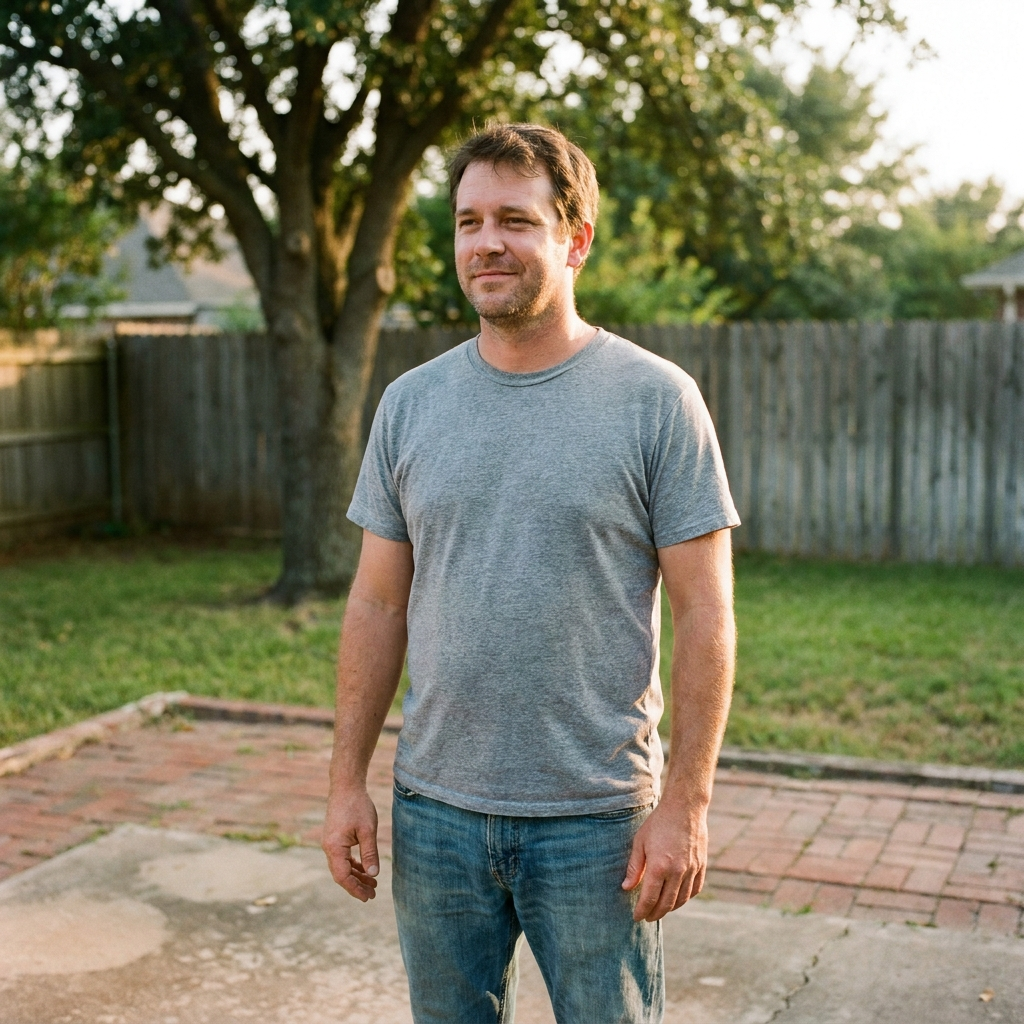
By Matt Holloway | Contributing Editor | Updated October 2026
Tested In My Own Yard8 Weeks, 24 ProductsNo Brand SponsorshipsSkeeter-Syndrome Verified
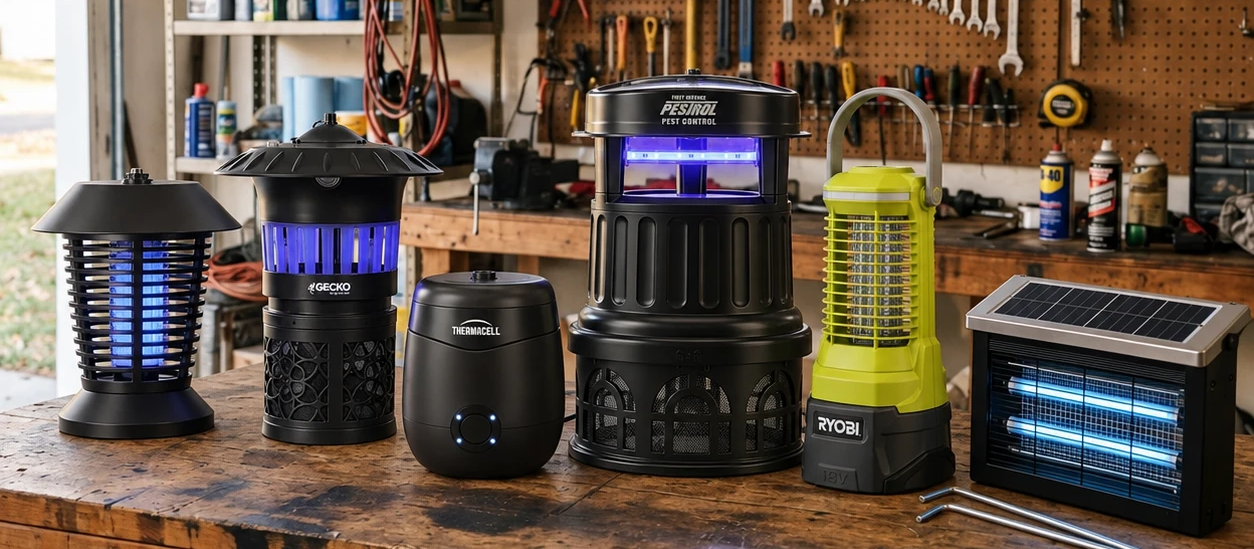
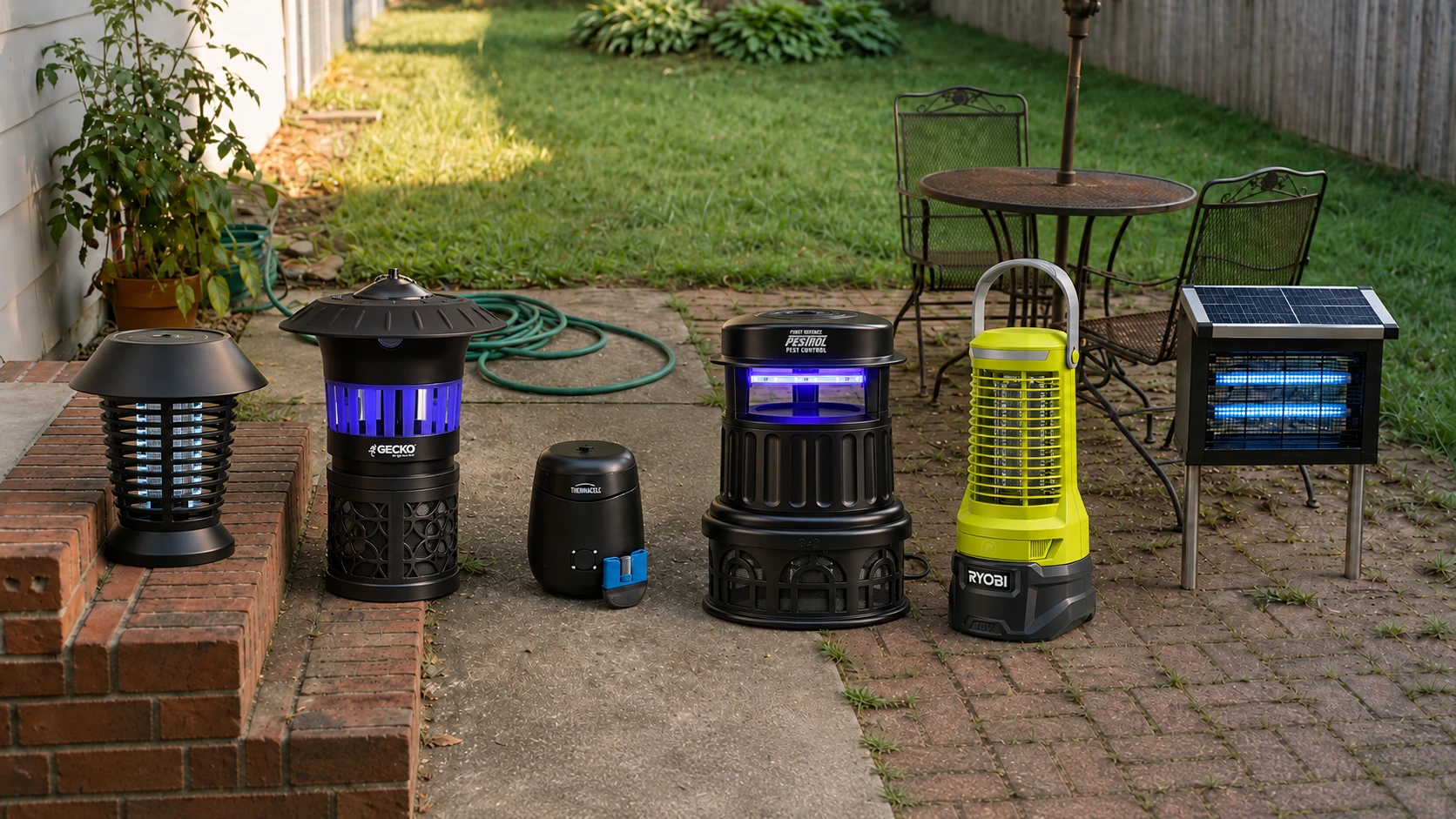
The six finalists, lined up on my garage bench after eight weeks of testing. Five of them are there because they lost. One of them isn't — because it's still staked in my yard.
My Two-Year War Against Mosquitoes. And The Only Six Things That Even Put Up A Fight.
Two years ago we settled on our house. Nothing fancy. One of those sixties places with a north-facing backyard, a big oak at the back over a patch of agapanthus, and a rusted iron bistro table the previous owners left on the patio like a little welcome gift.
I fell in love with that bistro table immediately. Within a week of moving in, my morning routine looked like this: pour a coffee, walk out the back door barefoot, sit at that table for twenty minutes and stare at the oak before anyone else in the house was awake. That was the plan. That was the whole reason I'd wanted a backyard.
Then summer came.
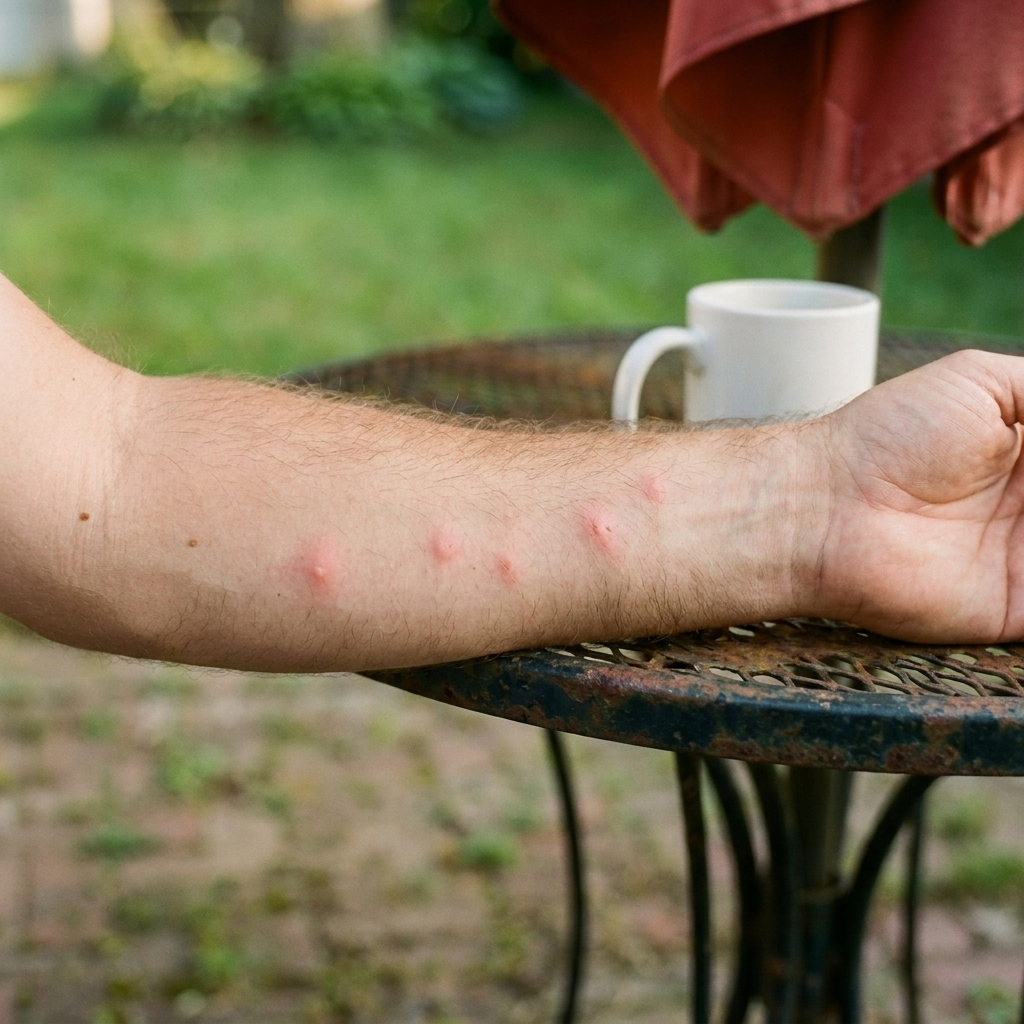
I'm going to skip the gentle prologue. Mozzies absolutely love me. Always have. My wife can spend an hour pulling weeds and come inside with one bite. I can walk from the back door to the barbecue and collect five. Five bites in a ten-minute period, easy, before I've even finished half a cup of coffee.
I've also got Skeeter syndrome, which is a real medical term I had to Google, and which basically means every bite I get swells up like a golf ball and itches for a week. Great combo for a man whose whole plan was "sit outside more."
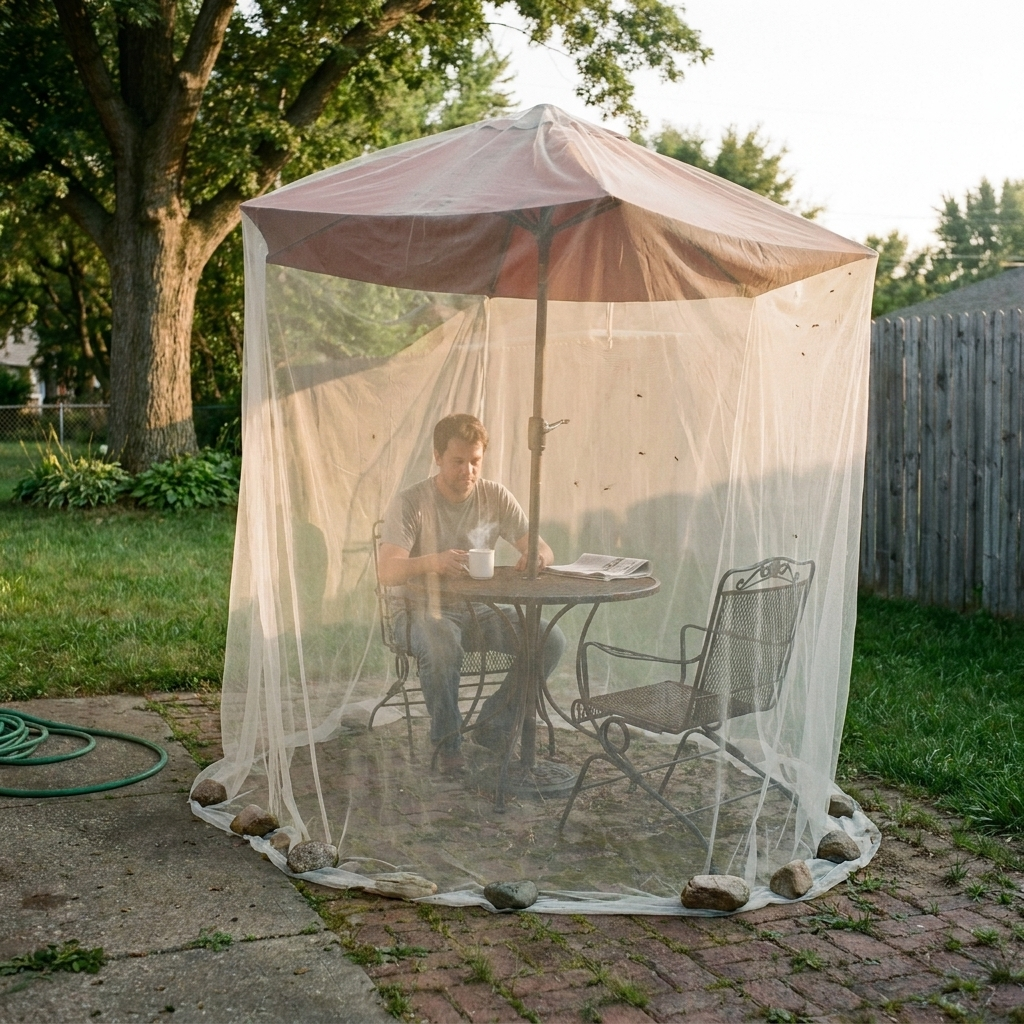
That first summer I barely survived. The only thing that let me use my own yard was a bistro umbrella I rigged up with a cheap roll of insect netting. Draped it to the ground, weighted the hem with river stones from the flowerbed, zipped myself in every morning like I was climbing into a field hospital.
I got to drink my coffee. I got to read the news. I also got to sit there and watch the squadron of mosquitoes lined up on the other side of the mesh like they were waiting on a nightclub bouncer.
That was the summer I figured out I didn't have a mosquito problem. I had a war.
So I went full obsessive. Twenty-four different things, across that first summer and deep into the next. I cleaned the gutters every four weeks because they kept pooling behind leaf plugs and turning into hatcheries. I emptied and scrubbed the birdbath every single morning. My kid called that "feeding the birds," which I found funny the first time and not the second.
I thinned out the honeysuckle near the verandah because three different people on Reddit swore they were mosquito condos, and I planted lemon balm and lavender in the dead spots. I built my own repellent in a spray bottle. Distilled water, lemongrass oil, cedarwood oil, eyeballed like a sauce recipe, smelled fantastic, protected me from exactly zero mosquitoes.
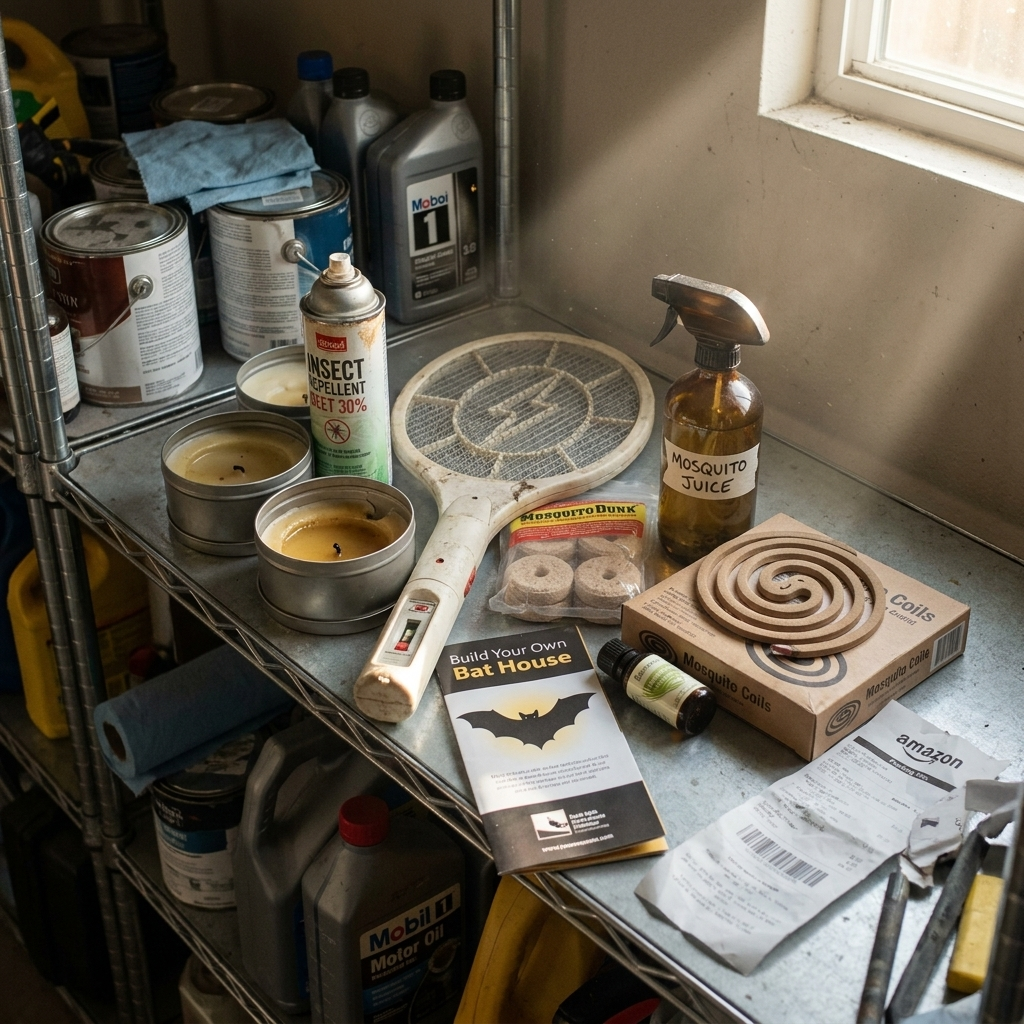
I burned through a case of citronella candles that smelled like patchouli and ashtrays. I went through mosquito coils. I went through a shameful amount of Aerogard, which I didn't want to be spraying on my arms while my kids watched, but by that point I would've happily worn Mortein as aftershave.
I bought a tennis-racket zapper that the kids loved for one weekend and I abandoned by the second. I threw larvicide tablets into every damp low spot I could find. I spent an entire rainy afternoon reading about bat boxes until I learned that my neighbour already has a microbat colony in his disused garage. His bats live there. And yet somehow, my yard is still a buffet.
"Just attract dragonflies." "Just build a pond." "Just get some bats." People who give that advice live next door to somebody tastier than them. That's the whole trick.
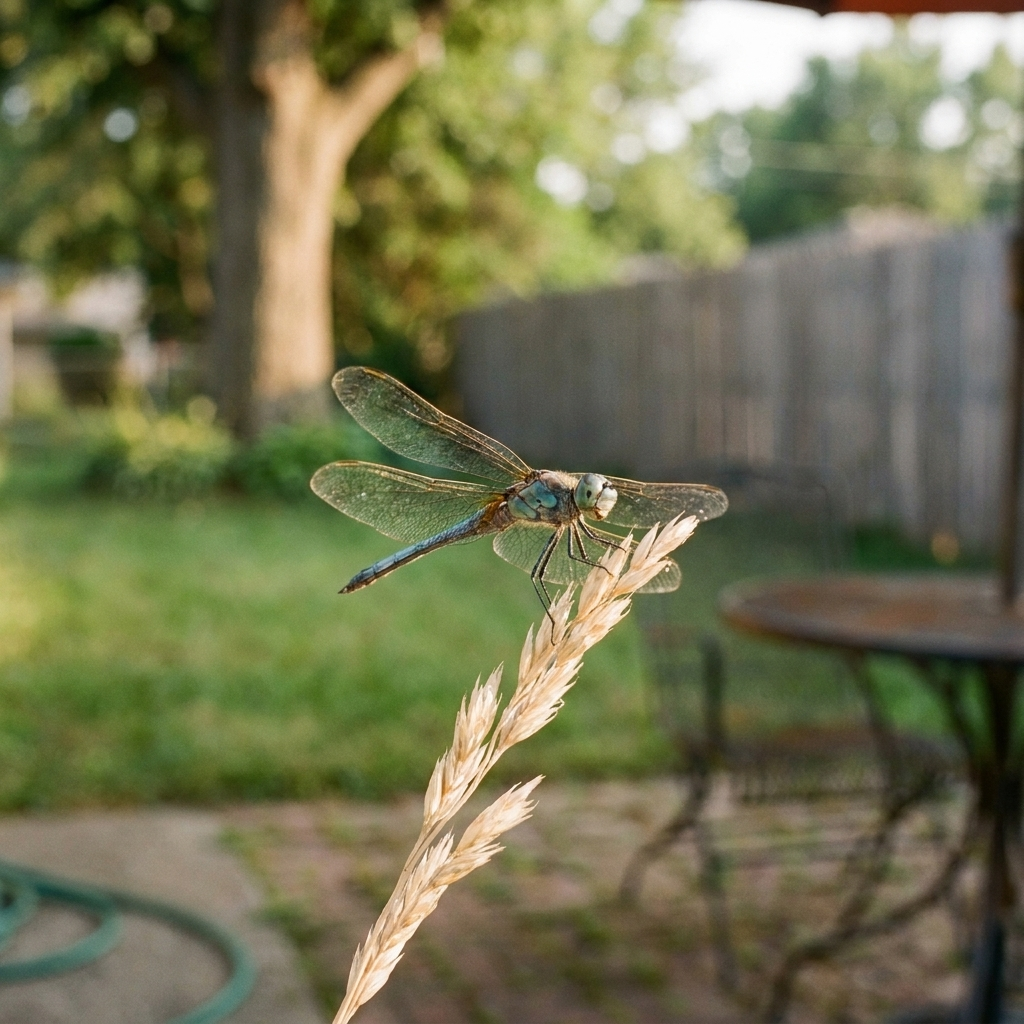
I have a neighbour with bats. I have a yard full of dragonflies. They're gorgeous little guys, by the way, and they spend more time literally fucking than eating mosquitoes. Drives me insane.
So when someone on a gardening forum tells you to "just increase your fauna," what they're really saying is their fauna's been doing fine, because it's eating whoever is next door.
That's why I'm writing this post. Because eventually I stopped listening to the natural-habitat crowd, stopped listening to folk remedies, stopped trusting the five-star online reviews, and started actually testing things in the one place that counts: my backyard, with me sitting in it.
Twenty-four solutions tried. Six worth taking seriously. One still running in the corner of my patio as I type this.
The Setup
Before The Rankings: What I Was Actually Looking For (And What I Learned About Mosquitoes That Changed Everything)
Most people I talk to assume mosquitoes are just out there, drifting around, bumping into you by accident. That's not what's happening. They're hunters and they're tracking you specifically.
Mosquitoes follow three signals humans can't turn off: the CO2 you exhale, the heat coming off your skin, and the lactic acid in your sweat. Three different broadcast frequencies, all screaming "blood mammal, come and get it," every second you're outside. No candle, no spray, no yeast packet hanging from a tree is going to beat that combo while you're sitting under it.
Which means fixing a mosquito problem is actually two different jobs, and you want to win at least one of them.
Job One — Cut Off The Breeding Side
Empty everything that holds standing water for more than a few days. Birdbaths, plant saucers, the sagging tarp over the firewood, the gutter that hasn't drained properly since winter, the cup your kid left upside-down on the trampoline. This part is free. It's boring and it works, and if you don't do it, nothing else on this list is going to matter.
Job Two — Deal With The Adults Already Flying In
From your neighbour's yard. Because your neighbour is not going to clean out his gutters for you. Ever.
Job two is where 99% of products live, and job two is where the six below stack up against each other. Here's what I figured out (mostly the hard way) about what separates a job-two solution that actually works from one that just looks like it does.
Our Methodology
The 4 Things I Measured Every Product Against
Four tests. Miss one and you're just killing moths for six weeks.
1
Actually Knocks Down The Population Over Time
Nobody kills every mosquito in your yard on night one. A real job-two solution quietly takes out enough incoming adults, night after night, that two or three weeks in you're getting bitten far less. It has to run every night, sit at mosquito altitude (ankle to knee, under 1m), and throw enough UV to be the brightest thing in the yard when you're inside.
2
Actually Covers A Yard, Not A Lap
If your "solution" protects a bubble one metre across, your yard is still a buffet with one safe seat in the middle of it. Real yard coverage is measured in square metres and it defends the space you actually use: patio, barbie, sandpit, chair in the shade. Anything that only works pointed at you is fine for camping, not a yard.
3
Actually Stays Running (Without Me Babysitting It)
Any solution that demands a monthly task is a solution you'll quit by January. The good ones activate themselves at the right time, shut themselves off at the right time, and survive being hosed down when they get gross. The bad ones want you to press buttons, order refills online, and remember the refill schedule.
4
Doesn't Cost More In Year Three Than It Does In Year One
The A$55 repeller with the A$38 refill every 40 hours ends up north of A$450. The A$269 plug-in trap adds power bills that never stop. The A$50 solar lantern is cheap until you need eight for one yard. My honest test of "affordable" is what you're still paying in year three. Year-three = year-one gets an immediate gold star.
Alright. Here are the six that survived. Ranked from the one I'm actively scrolling past on Facebook Marketplace right now, up to the one that's literally still running in my backyard as I write this.
The Rankings
The Six Worth Taking Seriously — Ranked.
Ranked by how they performed across all four criteria in my actual backyard, on me, over eight weeks of summer.
★ Still Staked In My Yard
#1 — The One That Ended It
GroundGuard Sentinel (Solar UV Bug Zapper)
Tested: Week 8. Still in use today.
Our Grade
A+
Score
9.7/10
★★★★★
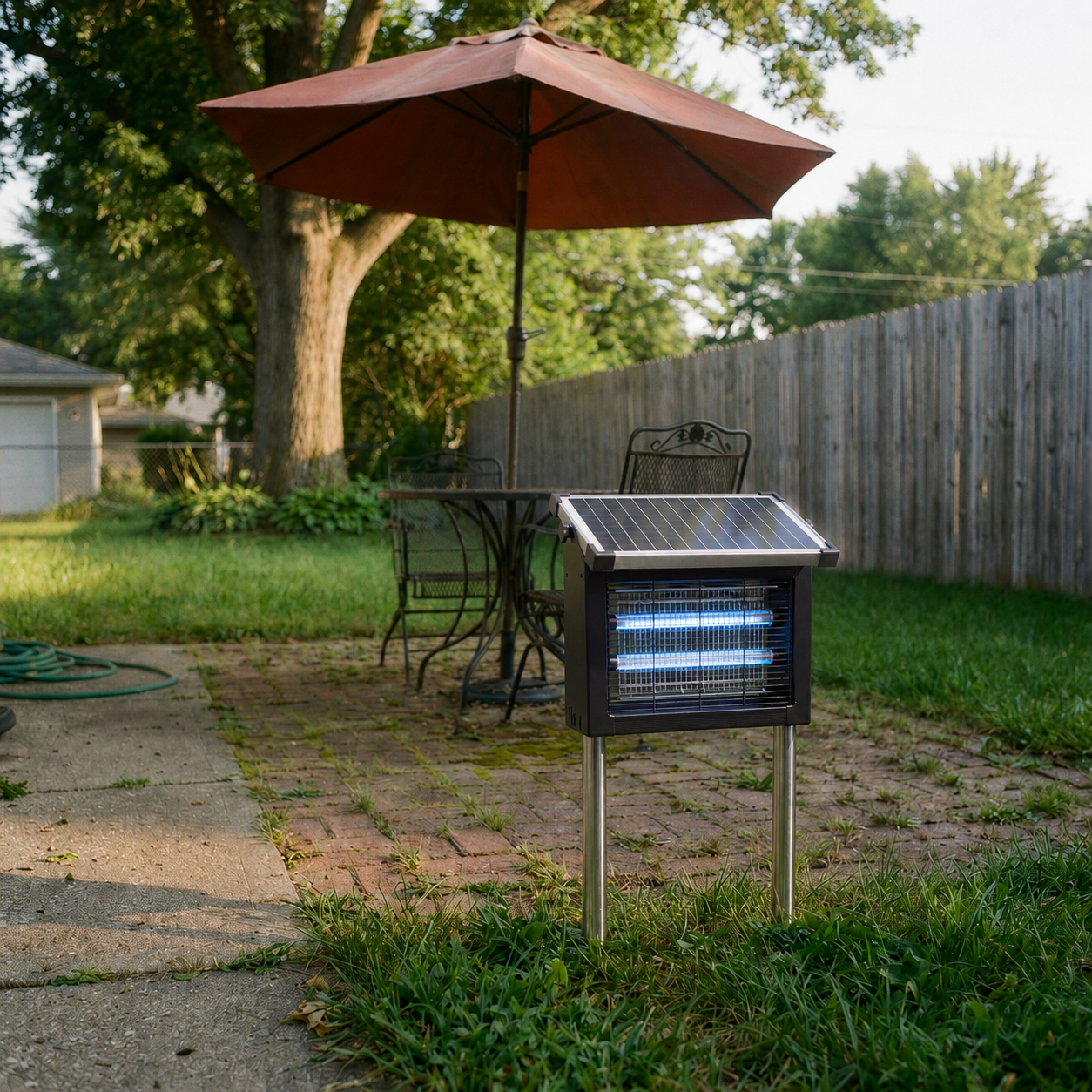
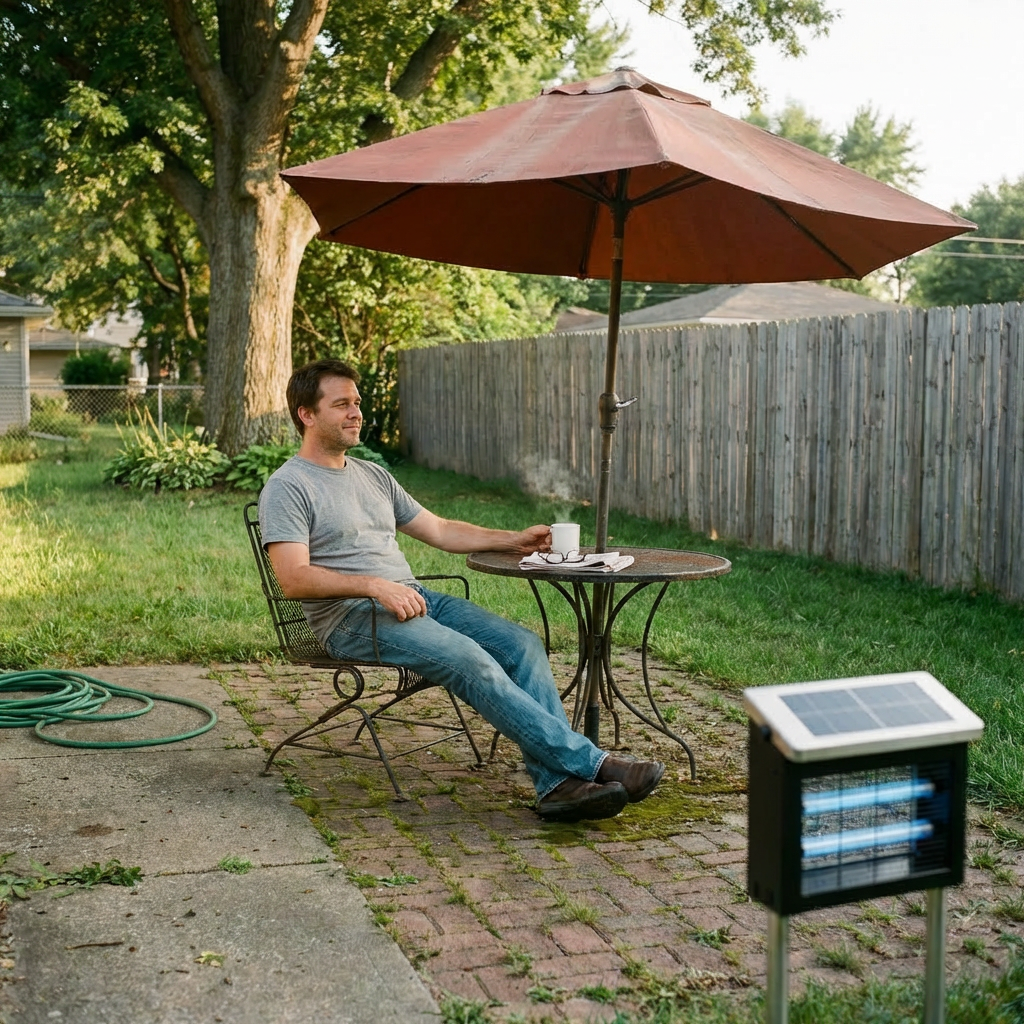
GroundGuard staked in the corner of the patio, catching the last of the afternoon sun for the night shift. I stopped thinking about it around week three.
Price: A$189.95 (one-time, A$199.95) | Runs on: Solar + USB-C backup | Year-3 total: Still A$189.95
Voltage
4,500V grid
Coverage
About 195 m² per stake
Power Source
Solar (with USB-C backup)
UV Attraction
Two full-length UV tubes
Mounting Height
Knee-height ground stake
Waterproof
IP66 rated
Modes
Auto (dusk-to-dawn) / Manual / Off
Setup Time
~4 minutes, three snap-on legs
Maintenance
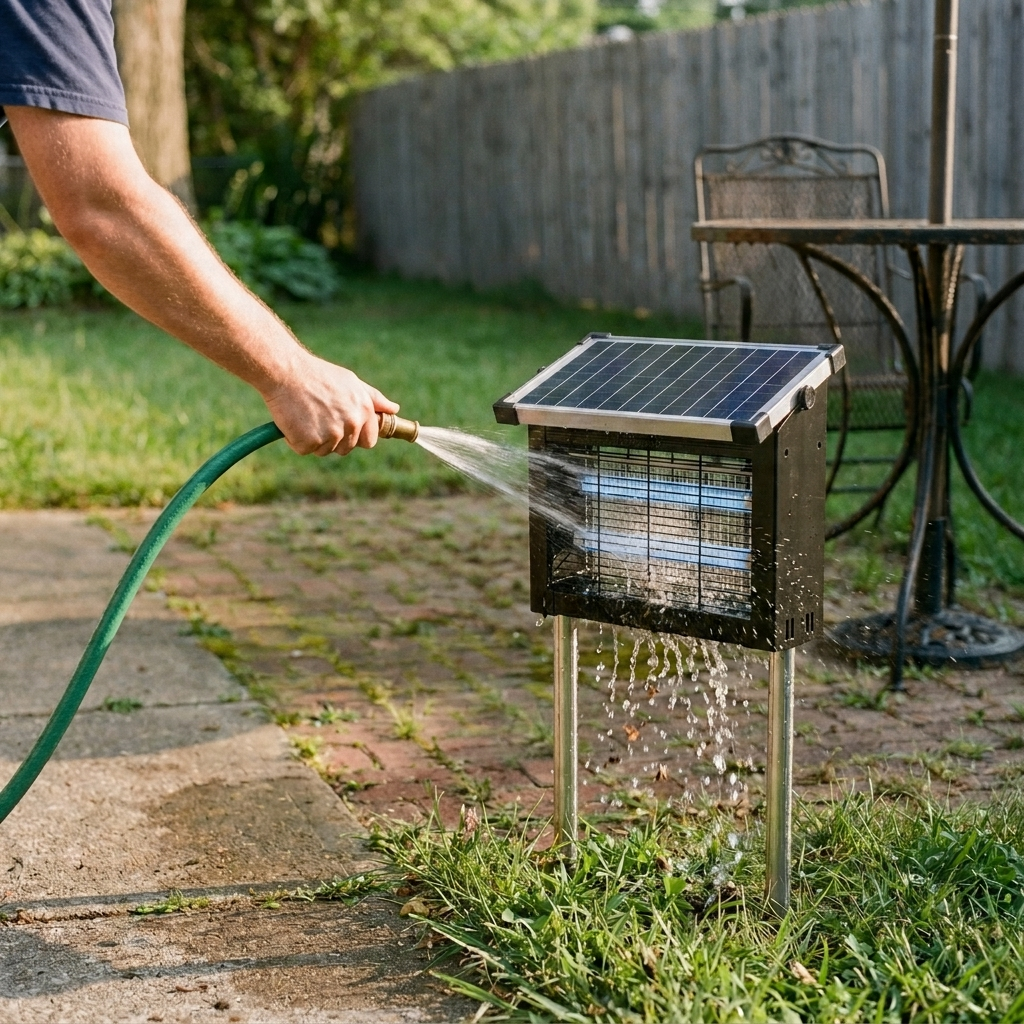
Hose out the catch tray. That's it.
Ongoing Costs
A$0 — no bulbs, cartridges, refills, batteries
✓Knocks down population over time — Two weeks in, the morning bite count dropped off a cliff. It charges itself during the day, turns itself on at dusk, runs all night, every night, without me doing anything.
✓Real yard coverage — About 195 square metres from one stake. Covers the patio plus most of the lawn. For a standard suburban backyard, one unit is enough.
✓Doesn't need babysitting — Auto-on at dusk, auto-off at dawn. No plug, no cord. Catch tray pops off and hoses out. No bulbs, cartridges, repellent refills, or batteries to remember.
✓Doesn't cost more in year three than year one — A$189.95. One time. Solar charges it for free. Year three, it's still A$189.95. Five summers = under A$38 a summer — a fraction of what every other product on this list charges you in refills alone.
How I Found Out About It
My brother-in-law put one in his yard and then would not stop talking about it at my kid's birthday party. I finally ordered one out of pure peer pressure and a desire to change the subject. Lowest-effort purchase of my entire two-year mosquito journey, and the one that ended it.
My Experience
Pulled it out of the box. Snapped on three metal legs. Pushed the stakes into the soft dirt at the corner of the patio. Flipped a switch to Auto. That was the whole setup. Took about four minutes, including walking back inside.
First zap came from the yard around 8:45 that same night, while I was doing dishes. Woke up the next morning to a tray full of moths and a handful of actual mosquitoes. Then night two. Then night three.
By week three I was drinking coffee at the bistro table (the netting umbrella was gone by then, I'd burned it in spite) and getting maybe one bite a morning, max. By week five, zero.
Why This One Works When The Others Didn't
Because it hits all three of the conditions from Criterion 1. It runs every single night because solar means there is nothing for me to forget. It sits staked at knee height, which is exactly where mosquitoes fly. And it throws serious UV off two full-length tubes, not some dim little LED that can't out-brighten a porch lamp.
The other zappers I'd tried had one or two of those going for them. This one has all three.
Population Knockdown9.8
Yard Coverage9.4
Zero Babysitting9.9
Year-3 Cost10.0
Setup Speed9.6
Weatherproofing9.5
Pros
Solar charging means I genuinely stopped thinking about it after the first week. It just works.
4,500V grid doesn't mess around. Bugs hit it, bugs drop.
IP66-rated, which in non-brochure English means it survived a full Saturday of rain and was running Sunday morning with no issues.
Catch tray is hose-cleanable. No cartridges. No refill schedule. Nothing to reorder.
Cons
Coverage is generous but not infinite. If you've got a full acre, you want two.
The UV glow is noticeable at night, which is fine if the unit is 5–6 metres away but weird if you stake it two metres from where you sit.
Not silent. Not loud either. You hear the occasional pop, which after two years of being bitten I find genuinely satisfying.
Still in use? Yes. This is the one. Still staked in the same corner of the patio. I'm looking at it through the kitchen window as I type this.
✓Knocks down population over time — Mostly, yes. The Dominator is a properly engineered trap, not a gimmick. Ultraviolet light, warmth and colour attract the flyers, and a fan-driven gate prevents them escaping.
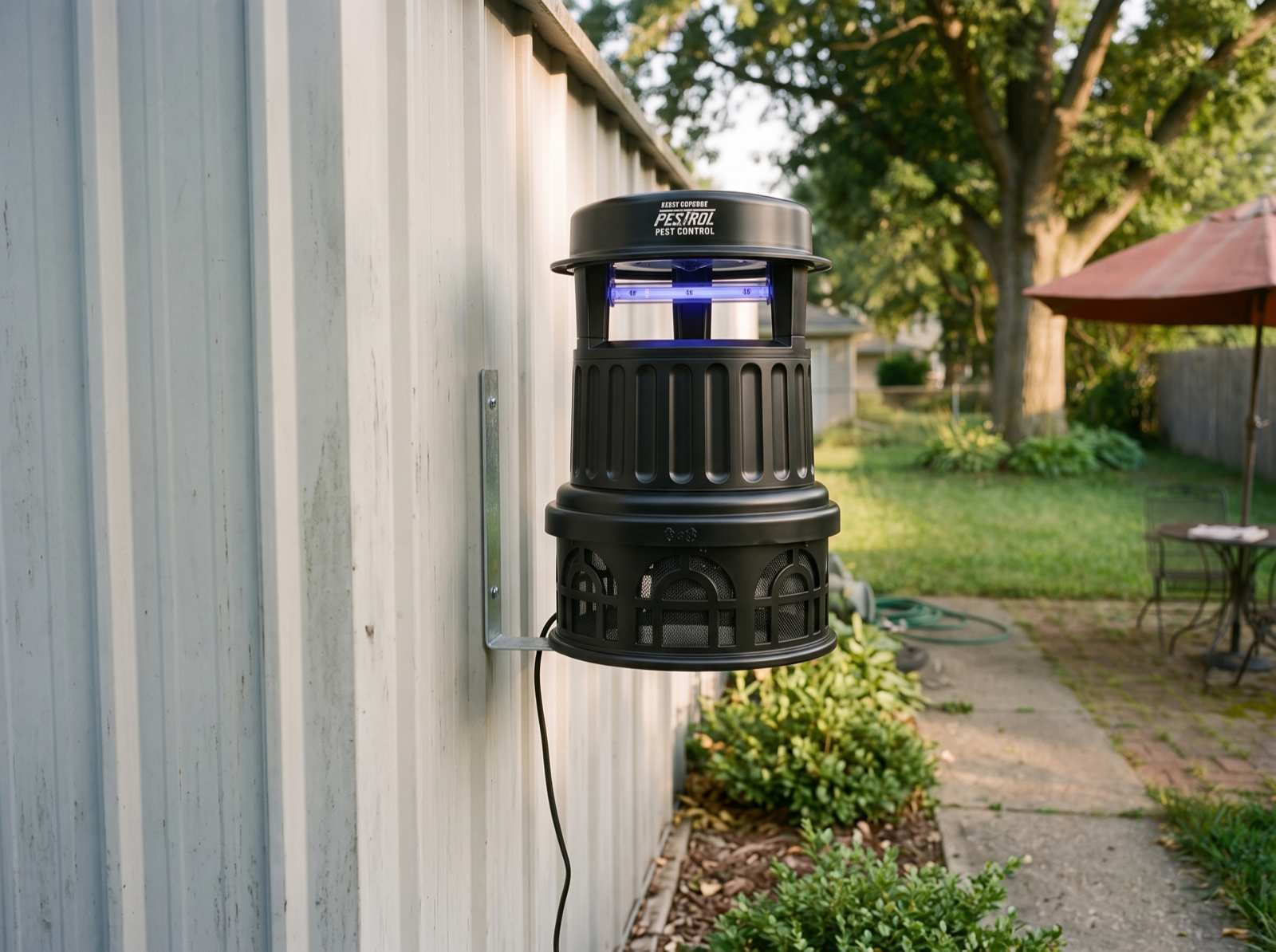
~Real yard coverage — Claims one acre, which is more ground than my block. Pestrol's own advice is to put it between the breeding spots and where people sit, not next to you, so placement matters more than the number.
✕Needs babysitting — No propane, no lure subscriptions, which I respect. But it's a 240V plug-in that wants to sit at least a metre up, there's no dusk sensor (Pestrol suggests a plug timer), and the catch tray needs emptying.
✕Year-three cost adds up — A$269 before it's plugged in. Running 24/7 at 14 watts is A$40 a year in power. Three-year total lands around A$390, plus bulbs.
How I Found Out About It
After three weeks of cheaper solutions letting me down, I hit the "I do not care what it costs, I will sell the car" phase and went looking for a serious, dedicated mosquito machine. Pestrol's Outdoor Dominator kept coming up: over a hundred customer reviews, mostly glowing, claimed coverage of an acre. My wife asked if our backyard was an acre. It is not.
My Experience
Setup was the first surprise. It wants to hang at least a metre off the ground, in shade, away from where people sit, and within reach of a 240V outlet. In my backyard, those four conditions overlap in one spot: behind the shed. So that's where it lived, humming, with an extension lead tucked along the fence.
First full month: genuinely impressive. Bite count visibly dropped. The catch tray was a moth graveyard with a decent number of mozzies mixed in. I was about to become a true believer. Then I did the maths on a box running day and night behind my shed, and the honeymoon ended.
Population Knockdown8.4
Yard Coverage6.8
Zero Babysitting4.2
Year-3 Cost5.2
Setup Speed3.8
Weatherproofing7.4
Pros
Dedicated mosquito-control trap with a thoughtful multi-lure design. Ultraviolet light, warmth and colour, plus a fan.
Up to one-acre coverage claimed, which suits big blocks and acreage properly.
4.5 stars from over a hundred Pestrol customers, which is a strong track record for this category.
Cons
A$269 before you plug it in once.
No dusk sensor, so it runs around the clock or you purchase an outlet timer. Pestrol recommends continuous operation, which shows on the electricity bill.
It's a 240-volt plug-in appliance. Mine needed an extension lead along the fence to reach its spot.
It's a substantial, heavy-looking unit that has to be mounted a metre up. Hardly subtle.
Still in use? No. Sold it on Facebook Marketplace at the end of summer two. A bloke with a five-acre hobby farm picked it up, which is honestly exactly the right home for it. It's a lot of machine for one suburban patio.
Tested: Week 5. Donated to a friend with a bigger yard.
Our Grade
B
Score
6.9/10
★★★★★
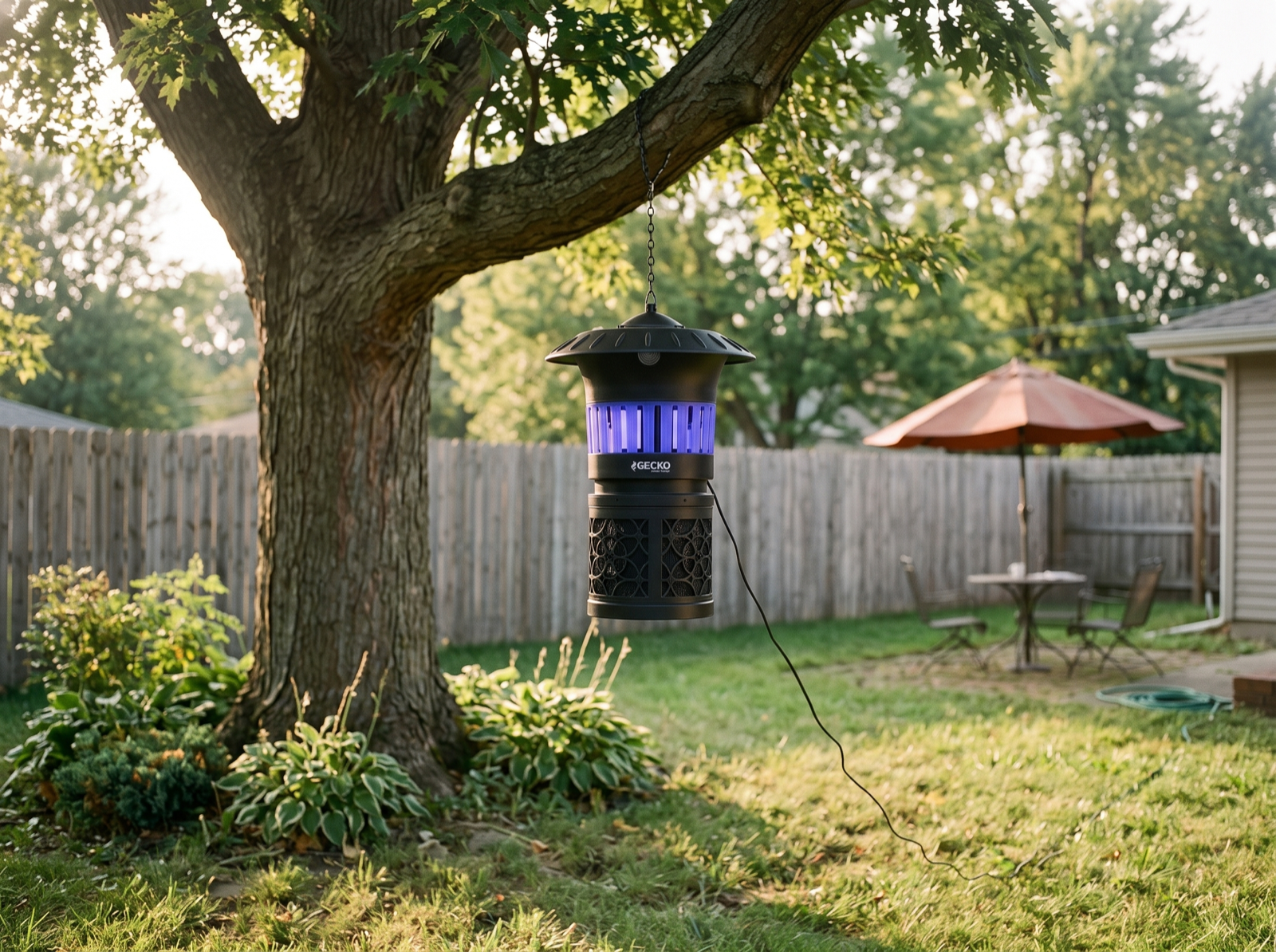
The Gecko hanging high in the oak, tethered to the house by its two-metre cord and an extension lead. Looks like a smart speaker that eats bugs.
Price: A$130.83 at Bunnings | Globe: A$16.75 (7W UV replacement) plus mains electricity to run
Lure
Ultraviolet + CO2 + heat
Catch
Fan suction, no-escape basket
Sensor
Switches on and off with daylight sensor
Claimed Range
Up to 40 m radius (manufacturer)
Power
Corded, 2 m lead, fan
Retailer Rating
2.8/5 from 46 Bunnings ratings, which is a separate thing from my own score
✓Knocks down population over time — On paper, absolutely. Carbon-dioxide and warmth are two of the three signals mosquitoes track, plus ultraviolet, and a fan vacuums them into a basket.
~Real yard coverage — Claims a 40-metre radius, which is considerably bigger than my block. A lure radius isn't equivalent to a cleared yard.
~Needs babysitting — The good news: auto on at dusk, off at dawn, IPX4 weather resistance. The less good news: it's corded, so it lives wherever the extension lead reaches, and the basket needs emptying.
✕Year-three cost — A$130.83 up-front, the cheapest dedicated trap here. But it's mains-powered nightly, and the 7-watt UV globe is an A$16.75 consumable. Year three ≠ year one.
How I Found Out About It
It was sitting on the shelf at Bunnings beside the zappers, and the packaging made a better argument than anything else in the aisle: ultraviolet, CO2 and heat, a 40-metre radius, automatic on and off. I was 19 months into this problem and had lost all perspective.
My Experience
It looks like a piece of designer homewares, not a bug trap. Took about twenty minutes to set up, most of it routing the extension lead along the fence, because the built-in cord is only two metres long.
The catch was a mixed bag, which tracks with the reviews. Some mornings the basket had a respectable haul of mozzies. Other mornings, it was mostly moths and midges. Bunnings customers have it at 2.8 stars, and I understand exactly why.
Population Knockdown6.4
Yard Coverage6.0
Zero Babysitting5.6
Year-3 Cost7.0
Setup Speed5.5
Bunnings Rating5.6
Pros
Three lures in one housing: ultraviolet, CO2 and heat.
Traps instead of zapping. Suction fan, no crackle, no bug fragments flicked everywhere.
Auto on-off light sensor, IPX4 rated, and free-standing on any surface.
At A$130.83 on the Bunnings shelf, it's an easy experiment.
Cons
Bunnings customer rating sits at 2.8 out of 5 from 46 reviews. That's hard to ignore.
Corded, with a two-metre lead. Extension lead across the yard for most spots.
A 40-metre radius claim describes a lure distance printed on packaging, not a promise your whole backyard becomes mozzie-free.
Another appliance in the yard, another globe to replace eventually.
Still in use? No. Gave it to a friend with a powered pergola and more patience than me. Clever idea. It just never felt like it was running my whole yard.
Tested: Week 3. Currently lives in my camping bag.
Our Grade
C+
Score
6.4/10
★★★★★
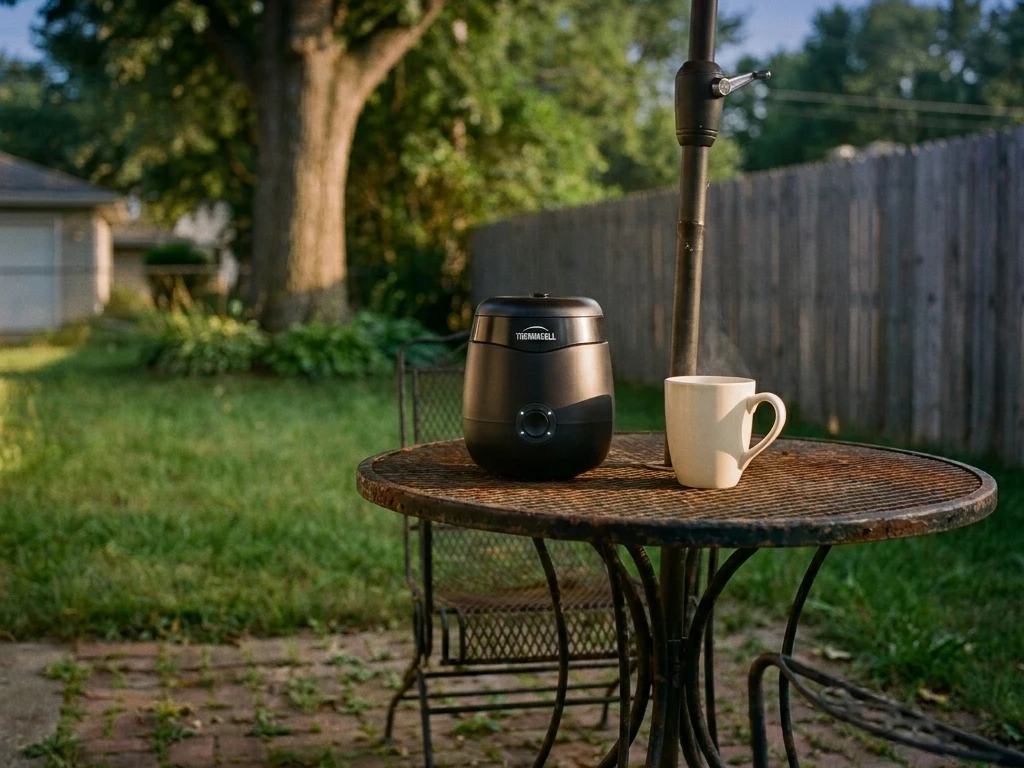
The Thermacell E55 on the iron bistro table one evening, glowing along at 8pm. It died around 1:30am. I found out about this when the mosquitoes woke me up.
✕Knocks down population over time — Doesn't decrease anything. It repels. Turn it off and the mosquitoes are back on you within a minute. Long-term population? Untouched.
~Real yard coverage — 28 m² while running. Zero metres while not. Breeze shrinks the zone further.
✕Needs babysitting — Battery dies at 5.5 hours. Refill cartridge runs 40 hours of actual runtime. You'll develop a deeply personal relationship with both.
~Year-three cost — A$54.95 up-front, cheaper than GroundGuard. But A$38 refills, ~A$150/yr for me. Three-year total creeps toward A$470.
How I Found Out About It
Walked into Bunnings on a Saturday morning in full "somebody help me" mode, sausage in hand. Every camping forum swears by it. My cousin has one on his deck. It felt like the responsible middle-of-the-road choice. It was.
My Experience
Set it on the iron bistro table, hit the power button, sat down with my coffee. For the first time in two summers, I had a morning outside my house with zero bites. Zero. I almost cried.
Then at about 12:30 the battery died and the mosquitoes came right back, as if they'd been waiting patiently in the bushes. Which, it turns out, they had. Same thing happened that evening. Same thing the next day. It worked perfectly, until it didn't, and when it didn't, the mosquitoes returned like old friends.
Population Knockdown3.8
Yard Coverage4.6
Zero Babysitting4.0
Year-3 Cost3.6
Portability9.5
Silent Operation9.0
Pros
Actually works for the 5.5 hours that it works. No ambiguity there.
Silent. No flame, no smoke, no chemistry-set smell.
Portable. Goes camping. Goes to the park. Goes to cricket. It found its purpose in life, just not in my yard.
Audio cues plus indicator LEDs display battery.
Cons
5.5-hour battery means long summer evenings end with you scrambling for a charge cable.
Refill cartridges at A$38 every 40 hours of use. Call it A$150 a season.
Turn it off and mosquitoes are back on you in under a minute. Zero residual effect.
Wind flattens the protective zone. Breezy nights, you're basically paying to hear a hum.
Still in use? Not at home. It lives in the camping duffel now. Great product for what it is. Not what I needed in my yard every single night of summer.
~Knocks down population over time — It kills what flies into it, with a 2,200–2,600V grid. But it's a general flying-insect zapper, and it usually spends its nights hung at eye height, not down where mosquitoes actually cruise.
~Real yard coverage — Bunnings doesn't list a coverage figure. Realistically it guards whatever it's hanging next to, which for me meant the pergola and not much else.
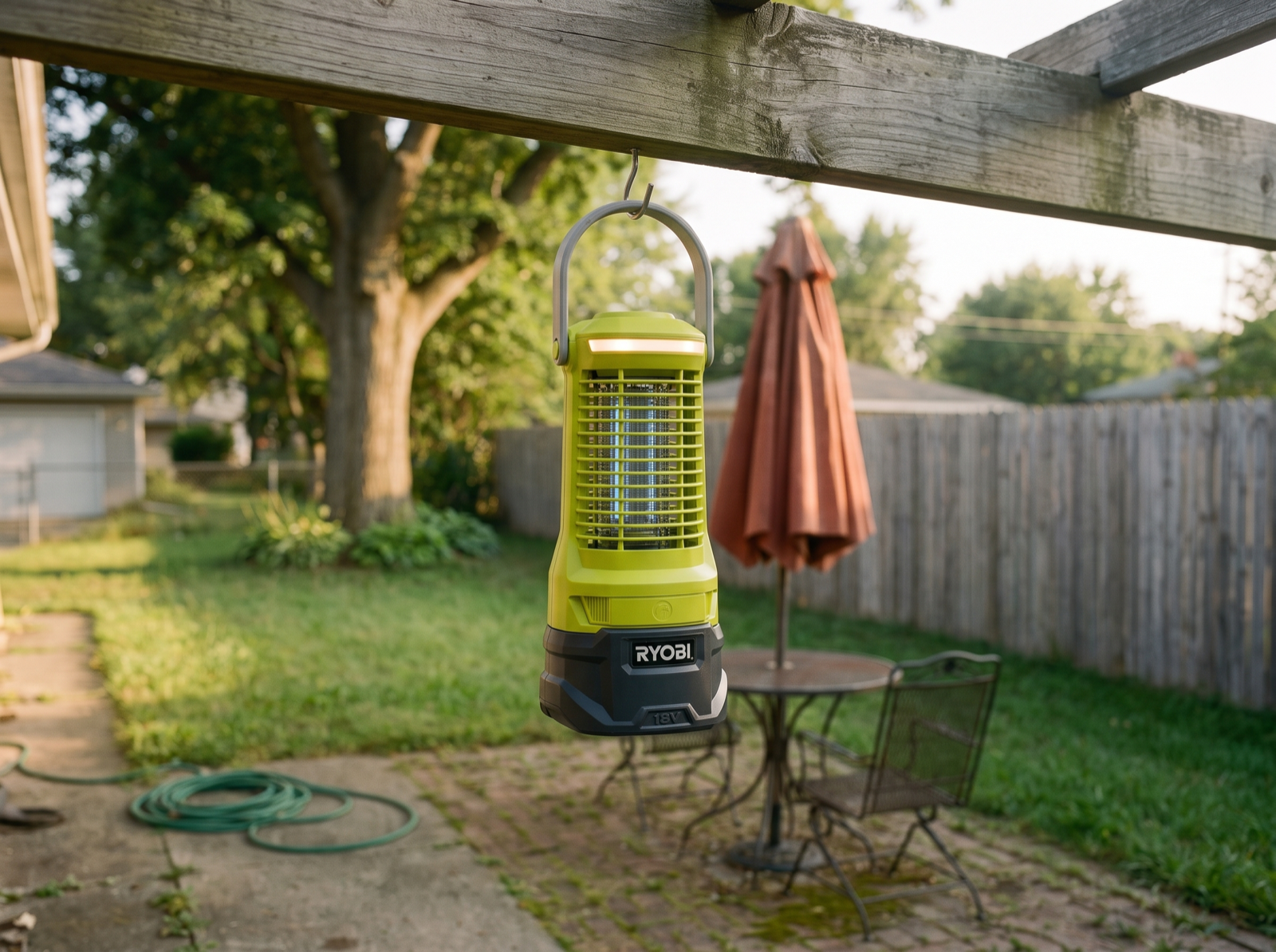
✕Needs babysitting — It's a battery tool: charge the 18V pack, switch it on, hang it up, bring it inside, repeat. The collection tray needs emptying and the bulb needs replacing eventually.
~Year-three cost — A$199 up-front, then practically nothing to run beyond the occasional bulb.
How I Found Out About It
I already own six RYOBI tools and a drawer of ONE+ batteries. It sat in the Bunnings aisle at 4.6 stars from 106 reviews. Honestly, the easiest decision of my summer.
My Experience
The good news: it's an excellent bit of kit. Bright 360° lantern on top, a phone slot and USB port, and a grid that crackles like it means business. The tray fills up quickly, which is encouraging. The catch came when I thought about where it spent its nights: hanging off the pergola at head height, or on the outdoor table next to me. Mosquitoes were down around my ankles while the lantern did its thing above them.
For an 18V battery I had to remember to charge and swap, that was not the trade I'd signed up for.
Population Knockdown5.4
Yard Coverage5.0
Zero Babysitting4.5
Year-3 Cost7.6
Build Quality9.2
Mosquito-Height Placement3.0
Pros
Properly well built. It feels like a power tool, because it basically is one.
4.6 stars from 106 Bunnings reviews. Thoroughly earned, too.
Shares identical ONE+ batteries with my cordless drill.
Good camping lantern that also zaps. Handy two-in-one for long weekends away too.
Cons
A broad flying-insect zapper, not a dedicated mosquito system. Different job, honestly.
Battery powered. Charge it, swap it, bring it inside. Nothing recharges it except you.
Usually hung or carried, so it sits well above mosquito flying height.
Big lantern form factor. Not something you leave staked out in the garden all season.
Still in use? Not in the backyard. It lives in the shed and comes camping with us, where it's genuinely excellent. Backyard mosquitoes at ankle height were never its real beat.
Tested: Week 1. Now a garden light by the letterbox.
Our Grade
F
Score
2.9/10
★★★★★
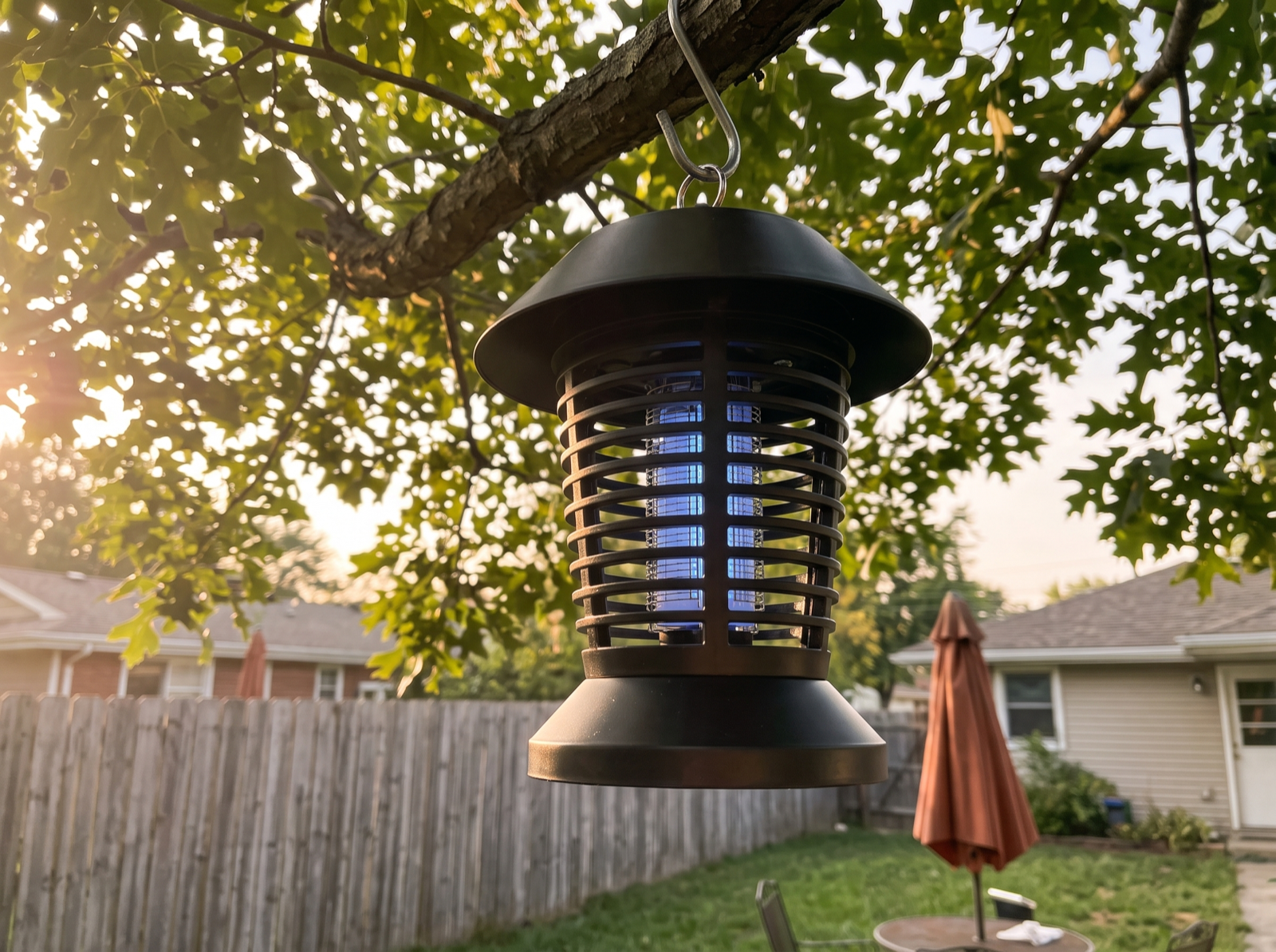
The Stinger Solar Bug Zapper Lantern hanging from the oak the first week I tested it. It looked about as serious as its price tag.
Price: A$49.86 at Bunnings, runs on solar | 3-year total: A$49.86
Advertised Area
25 m² protection area (Bunnings)
Coverage Gap
Roughly an eighth of GroundGuard's
Install
Charge in sun, then hang or place
Operation
Auto light sensor
Retailer Rating
1.9 out of 5, 50 Bunnings customer ratings
Power Source
Built-in solar panel, no mains needed
Grid Output
800 volts advertised, against GroundGuard's 4,500V, which works out a little over a sixth
Form Factor
Zapper plus lantern
✕Knocks down population over time — Not in my backyard. It zapped the occasional bug near the lantern. With 800 volts and a small UV lantern, it's built for a balcony or a camping table, not to pull mozzies out of a yard night after night.
✕Real yard coverage — 25 m² advertised. My backyard is roughly eight times that. You do the maths.
~Needs babysitting — This is where it shines. Built-in solar panel, light sensor, switches itself on at dusk. Zero effort. Not much effect, but zero effort.
✕Year-three cost — A$49.86, free to run, the cheapest thing on this list. But matching GroundGuard's 195 m² on paper takes about eight of them, which is roughly A$400 in lanterns across the yard.
How I Found Out About It
Bunnings, again. It was the cheapest zapper on the shelf with a solar panel on it. My logic was simple: if solar is the answer, why pay nearly four times as much? Every person reading this has made this mistake at least once in their life with something. This was just my turn.
My Experience
Charged it in the sun like the box said. Hung it from the oak. Sat under it. Bitten. Kept getting bitten.
Eventually I read the Bunnings reviews properly, which I should have done before buying it. Fifty customer ratings, averaging just 1.9 out of 5. That's not my editorial score, that's actual Bunnings buyers. Then I compared the numbers: 800 volts against GroundGuard's 4,500, and 25 square metres against 195. Same idea on the box, solar plus UV plus a grid. Very different machine underneath.
Reader, I laughed. Then I moved it to the front letterbox.
Population Knockdown1.5
Yard Coverage1.3
Zero Babysitting8.0
Year-3 Cost5.0
Bunnings Rating3.8
Grid Output1.8
Pros
Cheap up-front.
Genuinely solar, with a light sensor. Nothing to plug in, nothing to remember, nothing to refill.
Doubles as a lantern, which is a decent little garden light if you lower your expectations.
Cons
1.9 out of 5 from 50 Bunnings customer ratings. That's the buyers' verdict, separate from my F, and it's the lowest in this comparison.
800-volt grid. GroundGuard runs 4,500V. RYOBI's lantern runs 2,200–2,600V. It has comfortably the weakest grid of the three electric zappers I tested, by a wide margin.
25 m² advertised protection area. Fine for a balcony. A real backyard needs a lot more than that.
Lantern-style budget construction. Being solar powered simply isn't equivalent to a serious solar mosquito solution.
Still in use? Sort of. It's a garden light by the letterbox now. The mozzies have never been happier about it.
Scroll horizontally on mobile — the criterion column stays frozen.
GroundGuard Sentinel
Pestrol Outdoor Dominator
Gecko Triple Lure
Thermacell E55
RYOBI ONE+ Bug Zapper
Stinger Solar Zapper
Rank
#1
#2
#3
#4
#5
#6
Grade
A+
B-
B
C+
C
F
Up-Front Price
A$189.95
A$269
A$130.83
A$54.95
A$199
A$49.86
Year-3 Total
A$189.95
~A$390+
~A$165+
~A$470
~A$199
A$49.86
Attraction Method
UV (dual tubes)
Multi-lure UV
Triple lure
Spatial repellent
UV + electric grid
UV lantern
Power Source
Solar + USB-C
240V mains
Mains
Battery (5.5 hr)
Battery
Solar
Extension Cord?
No
Depends
Often (2 m)
No
No
No
Auto Dusk-To-Dawn
Yes
Always-on
Yes
Manual only
Not listed
Yes
Coverage (claimed)
About 195 m²
1 acre
40 m radius
28 m² zone
Unlisted
25 m² area
Ongoing Costs
A$0
~A$40/yr
Globes, power
~A$150/yr
Minimal
A$0
Setup Time
~4 min
Bracket + outlet
~20 min + lead
<1 min
Charge + hang up
Sun-charge + hang
Weatherproof
IP66
All-weather
IPX4
Unlisted
Unlisted
Unlisted
Still In Use?
Yes — week 8+
No — sold it
No — donated
Camping bag
Shed
No — letterbox light
Prices, specs and ratings from Bunnings and Pestrol listings, checked October 2026.
The After Picture
So Where Does That Leave Us
Two summers, 24 failed experiments, 6 serious contenders, one resentful trip to sell an A$269 mosquito machine on Facebook Marketplace, one lantern on letterbox duty, and one A$189.95 solar bug zapper later, I can sit in my own backyard again.
I can drink a coffee outside in the morning without donating blood. I can eat dinner on the patio without first spraying my kids with something that smells like a chemistry lab.
I'm writing this from the bistro table, for the record. No netting. Just me, the oak, the rusted iron chair, and a mostly dead mug of coffee.
If you're in the same boat I was in two summers ago, where every natural solution boils down to "move next door to somebody tastier than you," and every serious one shows up with a refill schedule attached, start with the simple one. Stake it in the corner of your yard. Walk away. Check your bite count in three weeks.
Worst case, you're out a couple hundred bucks — still less than the runner-up costs before it's even plugged in. Best case, you get your summer back.
The One That Ended It
Still Reading? Stake One In The Corner Of Your Yard And Check Your Bite Count In Three Weeks.
GroundGuard Sentinel Solar Bug Zapper
A$189.95, one-time (A$199.95). Solar. Auto dusk-to-dawn. IP66. 4,500V grid. Zero cords, zero cartridges, zero ongoing costs. Year three, it's still A$189.95.
Free shipping • 60-day money-back guarantee • No subscriptions, ever
Matt Holloway
Contributor at BackyardField Notes. Two-year veteran of the backyard mosquito war. Confirmed Skeeter-syndrome sufferer. Field-tests in a sixties backyard with one large oak, one rusted iron bistro table, and zero tolerance for "just get some bats."